Affiliate Marketing for Beginners: A Complete Step-by-Step Guide (2026)
Affiliate marketing for beginners can feel overwhelming — but it doesn’t have to be. In this complete guide, you will learn exactly what affiliate marketing is, how it works in 2026, and how to earn your first commission step by step — even if you have zero experience.
Affiliate marketing has officially crossed the $17+ billion mark globally in 2025—and in 2026, the industry is growing faster than ever before. Whether you are a seasoned blogger or someone exploring passive income through affiliate marketing for the very first time, the opportunity in front of you has never been bigger.
But here is the truth most beginners miss: affiliate marketing is not a get-rich-quick scheme. It is a proven, scalable business model that rewards those who understand how it works and take consistent action. From promoting the best affiliate programs for bloggers to building a content strategy around high-ticket affiliate marketing, success comes to those who treat it as a real business.
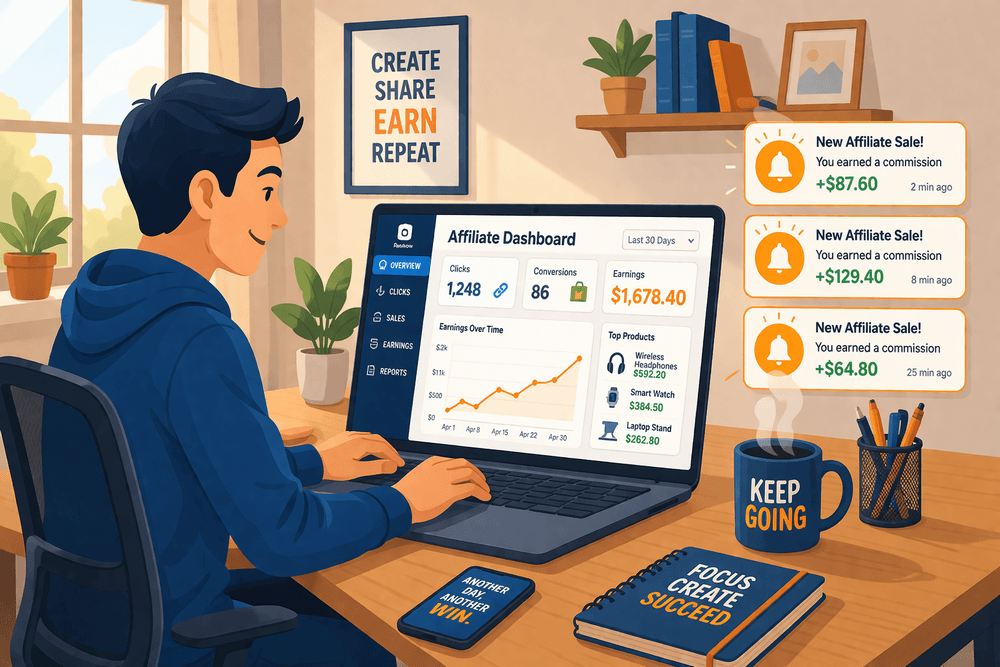
So, what exactly is affiliate marketing, and how does it work in 2026?
In this complete beginner’s guide, you will learn:
- What affiliate marketing is and how the commission model works
- How to start affiliate marketing from scratch—even without prior experience
- The best affiliate networks in 2026, including top picks for bloggers and content creators
- How to leverage SaaS affiliate programs and recurring commission affiliate programs for long-term income
- The latest affiliate marketing trends for 2026, including AI tools, TikTok affiliate marketing, and creator-led commerce
- How to drive traffic using SEO, content, and social media—including affiliate marketing without a website
- The best AI affiliate marketing tools to automate and scale your efforts
Whether you are a blogger, content creator, YouTuber, or a complete beginner wondering how to make money with affiliate marketing for beginners, this guide is written specifically for you. By the time you finish reading, you will have a clear, actionable roadmap to launch and grow your affiliate income in 2026.
Let’s dive in.
What Is Affiliate Marketing?
At its core, affiliate marketing is a performance-based marketing model where you earn a commission by promoting someone else’s product or service. You do not need to create a product, handle inventory, or manage customer support. Your only job is to connect the right audience with the right product — and get paid every time someone takes action through your unique affiliate link.
Think of it this way: imagine you recommended a fantastic restaurant to a friend, and the restaurant owner paid you ₹500 every time your friend dined there. Affiliate marketing works exactly like that — except it happens online, at scale, and can generate passive income 24/7.
What is affiliate marketing for beginners?
Affiliate marketing for beginners is a performance-based earning model where you promote someone else’s product using a unique tracking link. When a visitor clicks your link and makes a purchase, you earn a commission. You need no product of your own, no inventory, and no customer support — making it one of the best starting points for earning passive income online.
How Does Affiliate Marketing Work?
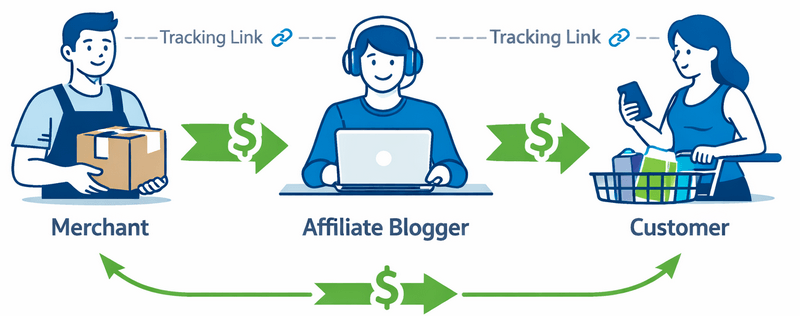
Affiliate marketing operates on a simple three-party model:
1. The Merchant (Advertiser/Brand)
This is the company or individual who creates and sells the product or service. It could be a software company, an e-commerce store, a course creator, or even a large brand like Amazon or Bluehost. The merchant sets the commission rate and manages the affiliate program.
2. The Affiliate (Publisher / You)
This is where you come in. As an affiliate, you join the merchant’s program, receive a unique tracking link, and promote the product through your blog, YouTube channel, social media, or email list. Every sale or lead generated through your link earns you a commission.
3. The Customer (End User)
The customer is the person who clicks your affiliate link and completes a purchase or desired action. They typically pay the same price they would anywhere else—your commission is paid by the merchant, not the customer.
The Role of Affiliate Networks
In many cases, a fourth party sits between the merchant and the affiliate—the affiliate network. Platforms like Awin, CJ Affiliate, Impact.com, and PartnerStack act as intermediaries that manage tracking, reporting, and payments. They give affiliates access to hundreds of merchants in one place, making it far easier to find and join the best affiliate programs for bloggers and content creators.
How Affiliate Tracking Works
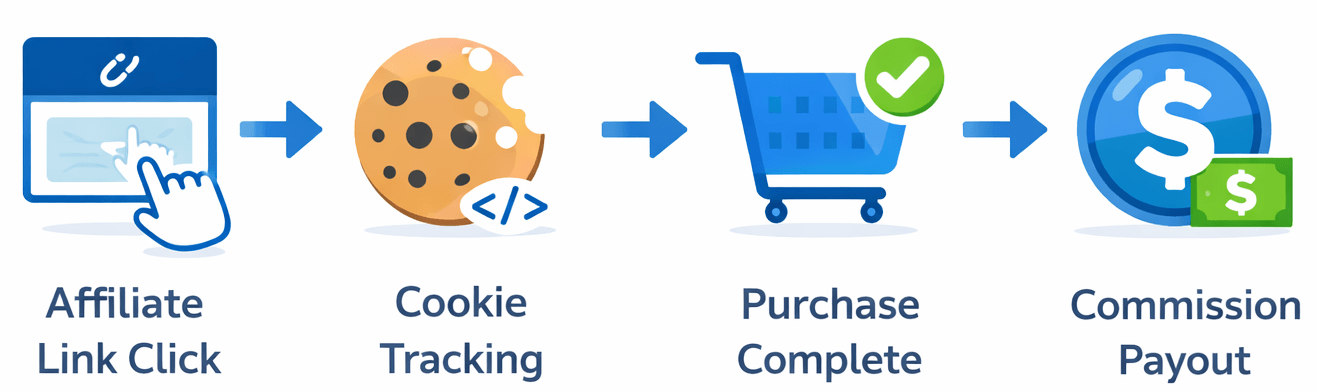
When you join an affiliate program, you receive a unique affiliate link embedded with a tracking code. Here is what happens when a customer clicks it:
- A customer clicks your affiliate link
- A tracking cookie is stored in their browser
- The customer browses the merchant’s website
- Customer completes a purchase (within the cookie window)
- The network’s or merchant’s system attributes the sale to you
- Your commission is recorded and paid on the agreed schedule
Cookie duration matters significantly here. Most programs offer a 30- to 90-day cookie window, meaning you earn a commission even if the customer does not buy immediately, as long as they return and purchase within that timeframe. Some premium SaaS affiliate programs and recurring commission affiliate programs offer cookie durations of up to 365 days, giving you a much longer earning window.
Affiliate Marketing Commission Models
Not all affiliate programs pay the same way. Here are the most common commission structures you will encounter:
| Commission Model | How It Works | Best For |
|---|---|---|
| CPS (Cost Per Sale) | Earn a % or flat fee per sale | Most common model |
| CPA (Cost Per Action) | Earn per lead, signup, or trial | SaaS, finance niches |
| CPL (Cost Per Lead) | Earn per email/form submission | Education, insurance |
| Recurring Commission | Courses, software, and luxury | SaaS, hosting tools |
| High-Ticket Commission | Earn $100–$1,000+ per sale | Courses, software, luxury |
💡 Pro Tip: Prioritise recurring commission affiliate programs and high-ticket affiliate marketing opportunities over low-commission physical products. A single SaaS referral paying $50/month recurring can outperform dozens of Amazon product commissions combined.
A Real-World Example
Let us say you run a blogging tips website (like BloggingDen). You write a detailed review of a popular WordPress hosting provider that offers a 60% commission per sale.
- A reader lands on your review post via Google
- They click your affiliate link
- They sign up for a hosting plan worth ₹5,000
- You earn ₹3,000 from a single referral—while you sleep
Now multiply that across hundreds of monthly visitors. That is the power of passive income through affiliate marketing.
Key Affiliate Marketing Terms You Must Know
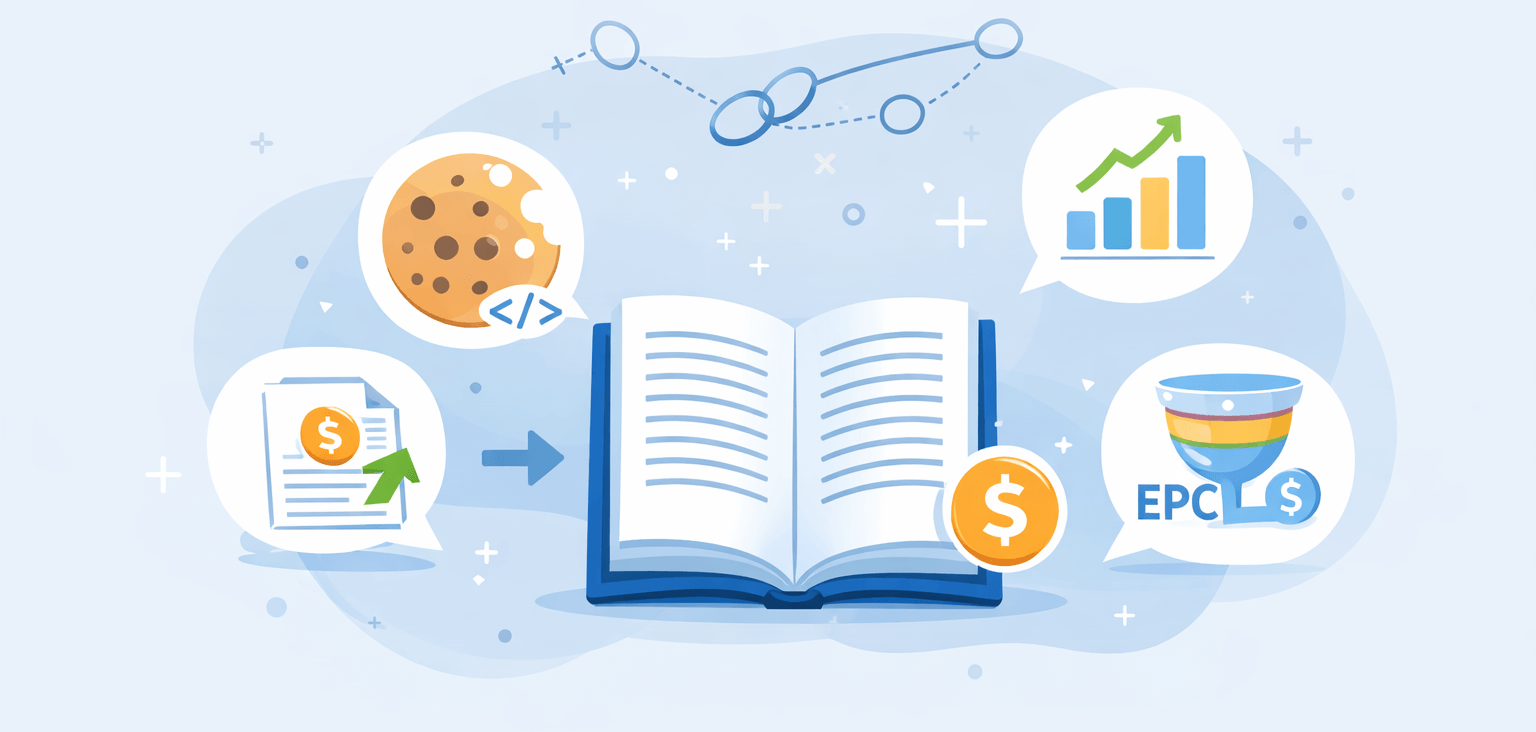
Before you dive into your affiliate marketing journey, it is essential to understand the core terminology used across the industry.
These terms will appear repeatedly — in affiliate dashboards, program agreements, and marketing guides. Knowing them up front will save you hours of confusion later.
The Complete Affiliate Marketing Dictionary
Master every term, metric, and concept you need to succeed in affiliate marketing in 2026. Bookmark this glossary for quick reference.
Core Players & Relationships
The key people and entities in every affiliate transaction
Links, Tracking & Technology
How affiliate links work and how conversions are tracked
Performance & Earnings Metrics
Key numbers that define your affiliate marketing success
Commission Models Terminology
The different ways affiliate marketers earn their income
Affiliate Marketing Trends to Watch in 2026
Affiliate marketing is not static. The strategies that worked in 2020 are not the same ones driving results today.

If you want to stay ahead of the competition and maximise your earnings, you need to align your approach with the latest affiliate marketing trends of 2026.
Here are the most important shifts shaping the industry right now:
1. AI-Powered Affiliate Marketing Tools
Artificial Intelligence has moved from a buzzword to a core operational tool in affiliate marketing. In 2026, top affiliates are using AI to:
- Generate SEO-optimised content drafts for product reviews and comparisons
- Predict high-converting keywords before they become competitive
- Automate A/B testing of landing pages and CTAs
- Analyse campaign performance and suggest real-time optimisations
Tools like Surfer SEO, NeuronWriter, Jasper, and ChatGPT are now standard in the affiliate marketer’s toolkit. If you are not leveraging AI affiliate marketing tools yet, you are leaving both time and money on the table.
2. TikTok Shop & Short-Form Video Affiliate Commerce
TikTok affiliate marketing has exploded in 2025–2026. With TikTok Shop now available in multiple markets, including India, content creators can tag affiliate products directly within their videos, making the path from discovery to purchase almost instant.
Key stats driving this trend:
- Short-form video content now drives higher click-through rates than traditional blog banners
- TikTok Shop affiliates are earning commissions on impulse-buy products within minutes of posting
- Instagram Reels and YouTube Shorts are following the same affiliate commerce model💡 Action Tip: Even if your primary channel is blogging, embedding short video content within your blog posts (linking to affiliate products) can dramatically increase your conversion rates.
3. Creator-Led Commerce & Micro-Influencer Partnerships
The era of mega-influencer dominance is fading. In 2026, micro-influencers (10,000–100,000 followers) with highly engaged niche audiences are delivering 3x to 5x better conversion rates than celebrity influencers.
Merchants are now actively seeking bloggers and niche content creators for long-term affiliate partnerships rather than one-off sponsorships. This is excellent news for bloggers on platforms like BloggingDen — your niche authority is your biggest asset.
4. First-Party Data Strategies (Post-Cookie Era)
With third-party cookies now largely phased out across major browsers, affiliate marketers are shifting to first-party data collection strategies. This means:
- Building and owning your email list (not renting social media audiences)
- Using contextual targeting in content rather than behavioural ad targeting
- Leveraging on-site quizzes, lead magnets, and opt-in forms to capture audience data directly
Affiliates who invested in email marketing funnels early are now seeing significantly more resilient revenue streams compared to those who relied solely on paid traffic.
5. High-Ticket & SaaS Affiliate Programs Dominate
In 2026, smart affiliates are moving away from low-margin physical product programs (like Amazon Associates with its 1%–4% commissions) and focusing on:
- SaaS affiliate programs — Tools like SEMrush, Ahrefs, ConvertKit, and Surfer SEO pay recurring commissions of 20%–40% monthly
- High-ticket affiliate marketing — Online courses, mastermind programs, and premium software paying $200 to $1,000+ per referral
- Hosting & WordPress tools — Evergreen demand from new bloggers globally💡 Pro Tip: A single SaaS referral paying $40/month recurring for 12 months = $480 per customer. Compare that to an Amazon commission of $2–$4 on the same effort. The math is clear.
6. Mobile-First Affiliate Experiences
Over 65% of affiliate traffic now comes from mobile devices. Yet many affiliate blogs and landing pages are still optimised primarily for desktop. In 2026, mobile-first design is non-negotiable:
- Fast-loading pages (under 3 seconds on mobile)
- Thumb-friendly CTA buttons placed above the fold
- AMP-compatible or lightweight WordPress themes
- Mobile-optimised comparison tables and product cards
Google’s mobile-first indexing means that a poor mobile experience directly hurts your search rankings — and your affiliate earnings.
7. Affiliate Compliance & FTC Transparency
Regulatory scrutiny around affiliate disclosures is increasing globally. The FTC (Federal Trade Commission) has tightened its guidelines, and similar regulations are being adopted in the EU and India.
In 2026, every affiliate content piece must include:
- A clear, upfront disclosure that affiliate links are present
- Honest, experience-based product reviews (not just recycled manufacturer specs)
- No misleading claims about earnings or product performance
Failing to comply not only risks legal penalties but also damages reader trust — the foundation of any successful long-term affiliate business.
8. Niche Authority Over Broad Content
Google’s Helpful Content Updates have fundamentally changed what ranks in 2026. Thin, generic affiliate content is being penalised while deep, expert-led niche content is thriving.
The winning formula now is:
- Topical clusters — cover every angle of your niche deeply
- First-hand experience — test and use the products you promote
- Author E-E-A-T signals — Experience, Expertise, Authoritativeness, Trustworthiness
- Long-form, comprehensive guides over short, surface-level posts
Affiliate Marketing Trends at a Glance
| Trend | Impact Level | Action Required |
|---|
| AI-powered content & tools | 🔴 Very High | Integrate AI tools immediately |
| TikTok Shop & short-form video | 🔴 Very High | Explore video affiliate content |
| Micro-influencer partnerships | 🟠 High | Build niche authority |
| First-party data & email lists | 🔴 Very High | Grow email list aggressively |
| SaaS & high-ticket programs | 🔴 Very High | Shift program selection strategy |
| Mobile-first optimisation | 🟠 High | Audit mobile UX immediately |
| FTC compliance & disclosure | 🟠 High | Review all existing posts |
| Niche authority content | 🔴 Very High | Build topical content clusters |
💡 Key Takeaway: The affiliates who will win in 2026 are those who combine AI-powered content creation, niche authority, email-first audience building, and high-value SaaS or high-ticket program selection. Adapting to these trends is not optional — it is the difference between a stagnant blog and a thriving affiliate business.
Benefits of Affiliate Marketing for Beginners

Affiliate marketing has attracted millions of bloggers, content creators, and digital entrepreneurs worldwide — and for very good reason.
It offers a unique combination of low risk, high scalability, and genuine passive income potential that very few other online business models can match.
Here are the most compelling advantages of affiliate marketing in 2026:
1. Zero Product Creation Required
The single biggest advantage of affiliate marketing is that you never have to create a product. No manufacturing, no software development, no course recording, no inventory management. You simply promote products that already exist, are already proven, and are already selling — and collect your commission.
This removes the most time-consuming and expensive barrier to starting an online business.
2. Extremely Low Startup Cost
Starting an affiliate marketing business requires minimal upfront investment compared to traditional businesses. All you fundamentally need is:
- A self-hosted WordPress blog (hosting costs as low as ₹150–₹300/month)
- A domain name (approximately ₹800–₹1,000/year)
- Basic SEO and content tools
- Time, consistency, and the right strategy
There are no office rentals, no employee salaries, no product development costs, and no minimum advertising spend required to get started.
3. Passive Income for Beginners — Earn While You Sleep
Passive income for beginners is not a myth — affiliate marketing is one of the only proven models where a blog post you write today can earn commissions for years. Once your SEO-optimised content ranks on Google, it works for you 24/7 — even while you are asleep, travelling, or spending time with family.
A single well-written product review post, ranked on page one of Google, can generate consistent affiliate commissions for years with minimal ongoing maintenance. That is the true power of passive income through affiliate marketing.
4. No Customer Support or After-Sales Responsibility
When someone purchases a product through your affiliate link, your job is done. All customer service, refund handling, technical support, and after-sales communication is the merchant’s responsibility — not yours. This keeps your business operations lean, simple, and stress-free.
5. Unlimited Scalability
Unlike a freelancing or consulting business, where your income is capped by the number of hours in a day, affiliate marketing scales without a linear increase in your workload. You can:
- Promote multiple products across multiple niches
- Publish more content to capture more search traffic
- Build multiple affiliate income streams simultaneously
- Grow from earning ₹10,000/month to ₹1,00,000/month+ using the same core systems
Your income ceiling is determined by your content volume, traffic quality, and program selection — not by how many hours you can physically work.
6. Work From Anywhere in the World
Affiliate marketing is a location-independent business. All you need is a laptop and an internet connection. Whether you are working from Hyderabad, Bali, or a mountain retreat in Himachal Pradesh, your affiliate links keep earning for you.
This flexibility is one of the primary reasons affiliate marketing consistently ranks as one of the top online business models for digital nomads and remote workers.
7. Access to Thousands of Programs Across Every Niche
No matter what niche you blog about — technology, finance, health, education, travel, or home improvement — there are hundreds of affiliate programs available to you. Platforms like Awin, CJ Affiliate, Impact.com, and PartnerStack give you instant access to thousands of merchants looking for affiliates like you.
8. Performance-Based Income — You Control Your Earnings
Unlike a salaried job where your income is fixed, affiliate marketing is entirely performance-based. The more value you create, the more traffic you attract, and the better you convert — the more you earn. There is no cap, no ceiling, and no waiting for an annual appraisal.
9. Diversified Revenue Streams
One of the smartest financial decisions a blogger can make is never relying on a single income source. Affiliate marketing allows you to simultaneously earn from:
- Recurring commission affiliate programs (monthly SaaS subscriptions)
- High-ticket affiliate marketing (premium one-time sales)
- Physical product programs (Amazon Associates, Flipkart Affiliate)
- Lead generation programs (CPL offers in finance, education, insurance)
This diversification protects your income even if one program changes its commission structure or closes its affiliate program.
10. Affiliate Marketing Without Investment — Start for Free
Unlike e-commerce or dropshipping, affiliate marketing can be done without investment. You can build a real, income-generating business using only free traffic from Google, YouTube, Pinterest, and social media — no ad spend required. Here is how:
- SEO-optimised blog content ranking on Google
- YouTube videos with affiliate links in descriptions
- Email marketing to your subscriber list
- Social media content on Pinterest, Instagram, and LinkedIn
This makes it one of the most accessible online business models for beginners with a limited budget.
Types of Affiliate Marketing Beginners Should Know

Not all affiliate marketing is the same. Depending on your content style, audience relationship, and income goals, there are different types of affiliate marketing for beginners you can pursue.
Understanding each model will help you choose the right approach for your blog and maximise your earning potential.
1. Unattached Affiliate Marketing
In this model, the affiliate has no direct connection or authority in the niche of the product they are promoting. There is no blog, no content, and no personal recommendation involved. The affiliate simply runs paid ads (such as Google Ads, Facebook Ads, or native ads) with their affiliate link and earns a commission on any resulting sales.
How it works:
- Affiliate finds a high-converting offer on a network like ClickBank or CJ Affiliate
- Runs paid traffic campaigns directly to the merchant’s landing page
- Earns commission on every sale — without any content creation
Best for: Experienced media buyers and PPC specialists who understand paid advertising deeply.
Drawback: High financial risk — you spend money on ads before earning commissions. Not recommended for beginners or bloggers with limited budgets.
💡 2026 Note: Rising ad costs on Google and Meta have made this model increasingly expensive and competitive. Most successful affiliates are moving away from pure unattached marketing toward content-driven models.
2. Related Affiliate Marketing
The affiliate has an established online presence — a blog, YouTube channel, podcast, or social media following — in a related niche, but does not necessarily have personal experience with the specific products they promote.
How it works:
- A travel blogger promotes travel insurance without having personally used the specific policy
- A tech blogger recommends a VPN service based on research, not direct usage
- Promotion happens through blog posts, YouTube videos, or social media content
Best for: Bloggers and content creators who have an audience but are expanding into new product categories within their niche.
Drawback: Lack of personal experience can reduce trust and conversion rates — especially after Google’s Helpful Content Updates in 2024–2026, which reward first-hand experience.
3. Involved Affiliate Marketing
This is the most credible and highest-converting type of affiliate marketing. The affiliate has personally used the product or service they are promoting and shares genuine, experience-based recommendations with their audience.
How it works:
- A blogger writes a detailed review of a hosting provider they actually use
- A YouTuber creates a tutorial using a software tool and includes their affiliate link
- A content creator shares honest pros and cons based on real usage
Best for: Bloggers, YouTubers, and content creators who want to build long-term trust with their audience and achieve consistently high conversion rates.
Why it dominates in 2026: Google’s E-E-A-T framework (Experience, Expertise, Authoritativeness, Trustworthiness) now actively rewards first-hand experience content. Involved affiliate marketing aligns perfectly with these ranking signals — making it the gold standard for affiliate bloggers today.
💡 Pro Tip: Always prioritise promoting products you have personally tested and genuinely believe in. Your audience can tell the difference — and so can Google.
4. High-Ticket Affiliate Marketing (High-Value Model)
A specialised approach where affiliates focus exclusively on promoting premium, high-value products or services that pay significantly larger commissions per sale — typically $100 to $1,000 or more per referral.
Common high-ticket affiliate categories:
- Premium online courses and mastermind programs ($500–$5,000+ products)
- Enterprise software and business tools ($200–$500 commissions)
- Web hosting & managed WordPress plans (up to $200 per referral)
- Financial products — credit cards, insurance, investment platforms
- High-end coaching programs and certifications
Why it matters in 2026:
The effort required to create a blog post that converts is roughly the same, whether you are promoting a $10 product or a $500 product. High-ticket affiliate marketing simply multiplies your revenue per conversion without multiplying your workload.
Example:
- Promoting an Amazon product at 4% commission on a ₹1,000 product = ₹40 per sale
- Promoting a premium SEO tool at 30% recurring on a $99/month plan = $29.70 every single month, per referral
The difference in lifetime value per customer is enormous.
5. Recurring Commission Affiliate Programs (Passive Income Model)
One of the most powerful affiliate models available to bloggers in 2026. Instead of earning a one-time commission, you earn a recurring payment every month for as long as the customer you referred remains an active subscriber.
Best niches for recurring commissions:
- SaaS tools — email marketing platforms, SEO tools, project management software
- Web hosting — managed hosting with monthly billing
- Membership sites — online communities and subscription content platforms
- Online course platforms — tools like Teachable, Kajabi, and Thinkific
Real-world example:
You refer a blogger to ConvertKit (email marketing tool) at a 30% recurring commission on their $29/month plan:
- Month 1: You earn $8.70
- Month 12: You have earned $104.40 from a single referral
- Month 24: You have earned $208.80 from one blog post
Now multiply this by 100 active referrals. That is the compounding power of recurring commission affiliate programs.
Choosing the Right Type for Your Blog
| Type | Best For | Risk Level | Income Potential |
|---|---|---|---|
| Unattached | Paid media buyers | 🔴 High | Variable |
| Related | Niche bloggers expanding categories | 🟡 Medium | Moderate |
| Involved | Bloggers with first-hand experience | 🟢 Low | High |
| High-Ticket | Authority bloggers with targeted traffic | 🟡 Medium | Very High |
| Recurring Commission | SaaS & tool-focused bloggers | 🟢 Low | Very High (compounding) |
💡 Key Takeaway for Bloggers: The most profitable affiliate marketing strategy in 2026 combines involved affiliate marketing (for trust and E-E-A-T signals) with high-ticket and recurring commission programs (for maximum revenue per referral). This combination delivers the best results with the least amount of content volume required.
How to Start Affiliate Marketing for Beginners in 2026 (Step-by-Step)
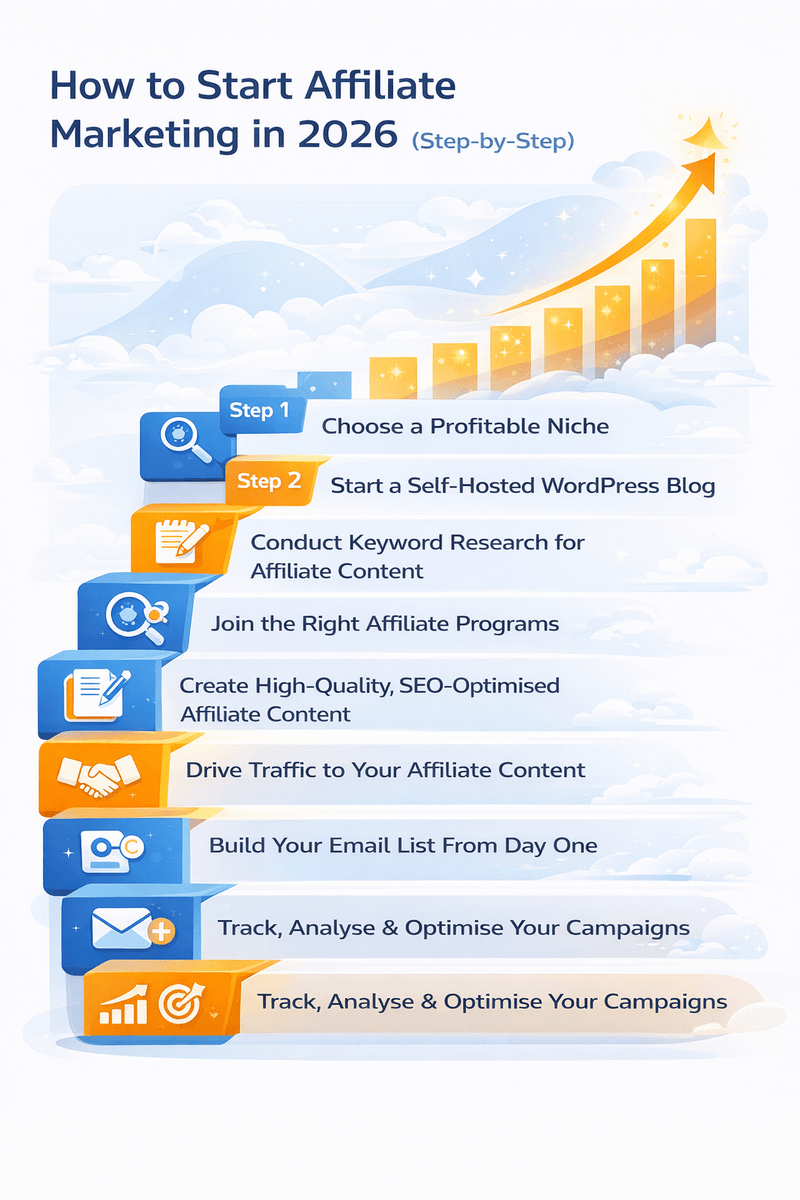
Starting affiliate marketing in 2026 is more accessible than ever — but success requires a clear, structured approach from day one.
Follow these eight proven steps to build a sustainable, income-generating affiliate marketing business from scratch.
Step 1: Choose a Profitable Niche
The first step in affiliate marketing for beginners is choosing the right niche. Everything begins with your niche. A niche is the specific topic area around which you build your entire content and affiliate strategy. Choosing the right niche is the single most important decision you will make as an affiliate marketer.
A profitable niche must have three qualities:
- Audience demand — People are actively searching for information in this space
- Commercial intent — Visitors are willing to spend money on products or services
- Affiliate program availability — Quality programs exist with competitive commissions
Top profitable niches for affiliate marketing in 2026:
- Web hosting, blogging tools & WordPress
- Personal finance, investing & credit cards
- Health, fitness & wellness
- SaaS tools & software reviews
- Online education & skill development
- Digital marketing & SEO tools
- Home improvement & smart home devices
💡 Pro Tip: Do not chase the most competitive niches blindly. A focused micro-niche (e.g., “SEO tools for bloggers” rather than “digital marketing”) allows you to build topical authority faster and rank more quickly on Google.
Step 2: Start a Self-Hosted WordPress Blog
Your blog is your primary affiliate marketing asset. It is the platform where you publish content, capture traffic, and convert visitors into affiliate commissions.
Why WordPress?
- Powers over 43% of all websites on the internet
- Full control over design, plugins, and monetisation
- Best platform for SEO-optimised affiliate content
- Supports essential tools like ThirstyAffiliates, Yoast SEO, and WPForms
What you need to get started:
- A domain name — choose a brandable, niche-relevant name (e.g., BloggingDen.com)
- A reliable web hosting plan — providers like Bluehost, SiteGround, or Cloudways
- Install WordPress — most hosts offer one-click WordPress installation
- Choose a fast, lightweight theme — GeneratePress or Astra are ideal for affiliate blogs
- Install essential WordPress plugins for SEO, speed, and link management
💡 Internal Resource: Follow our detailed step-by-step guide on How to Start a Blog to set up your WordPress site correctly from the very beginning.
Step 3: Conduct Keyword Research for Affiliate Content
Keyword research is the foundation of your organic traffic strategy. Without targeting the right keywords, even your best content will struggle to rank on Google.
Focus on these high-converting affiliate keyword types:
| Keyword Type | Example | Search Intent |
|---|---|---|
| Product Review | “SEMrush review 2026” | Commercial |
| Comparison | “Ahrefs vs SEMrush” | Commercial |
| Best of Listicle | “Best email marketing tools 2026” | Commercial |
| How-to Tutorial | “How to use ConvertKit for beginners” | Informational |
| Alternatives | “Best SEMrush alternatives” | Commercial |
Best keyword research tools in 2026:
- Ahrefs — Most comprehensive backlink and keyword data
- SEMrush — Best for competitor keyword gap analysis
- Google Search Console — Free, first-party data from Google itself
- Ubersuggest — Budget-friendly option for beginners
💡 Internal Resource: Read our in-depth Keyword Research Guide for advanced strategies to find low-competition, high-converting affiliate keywords.
Step 4: Join the Right Affiliate Programs
Once your blog is set up and your keyword strategy is in place, it is time to join the best affiliate programs for beginners. Do not make the common beginner mistake of joining every program available — focus on quality over quantity. The right program pays well, tracks reliably, and aligns with content your audience actually searches for.
Criteria for selecting the right affiliate program:
- Commission rate — Minimum 20% for digital products; 30%+ for SaaS
- Cookie duration — Aim for 30 days minimum; 90+ days is ideal
- Product quality — Only promote products you trust and would personally use
- Payment reliability — Check reviews from other affiliates before joining
- Recurring vs one-time — Prioritise recurring commission programs where possible
- EPC (Earnings Per Click) — Higher EPC = more profitable offer
Best affiliate networks to join in 2026:
- Awin — Ideal for bloggers across all niches
- CJ Affiliate — Access to large, established brands
- Impact.com — Premium brands with advanced tracking
- PartnerStack — Best platform for SaaS affiliate programs
- ClickBank — Digital products and online courses
- Amazon Associates — Physical products (lower commissions but high trust)
Step 5: Create High-Quality, SEO-Optimised Affiliate Content
Content is the engine that drives your entire affiliate marketing business. In 2026, Google rewards depth, first-hand experience, and genuine helpfulness — not thin, keyword-stuffed articles.
The highest-converting affiliate content types:
- In-depth product reviews — Personal experience + pros & cons + verdict
- Comparison posts — “Tool A vs Tool B” (high commercial intent)
- Best-of listicles — “10 Best SEO Tools for Bloggers in 2026”
- Step-by-step tutorials — Show readers how to use the product
- Resource/tools pages — Your personally recommended stack
Affiliate Marketing Tips for Beginners — Content Edition:
- Always write from personal experience — Google’s E-E-A-T rewards it
- Use your primary keyword in the first 100 words, H1, and one H2
- Add a comparison table for any “best of” post — it triples time-on-page
- Place your affiliate CTA button both mid-content and just before the conclusion
- Update every affiliate post every 6 months with fresh data and new links
Step 6: Drive Traffic to Your Affiliate Content
Publishing great content is only half the battle. You need consistent, targeted traffic to generate affiliate commissions. In 2026, the best traffic sources for affiliate bloggers are:
Organic SEO (Best Long-Term Strategy)
- Target low-competition, high-intent keywords
- Build topical authority through content clusters
- Earn backlinks through outreach, guest posting, and digital PR
Email Marketing (Most Controllable Traffic)
- Build your email list from day one using a lead magnet
- Send regular newsletters with affiliate recommendations
- Nurture subscribers with value-first content before promoting
Social Media & Video Content
- Pinterest — Excellent for evergreen blog traffic
- YouTube — Video reviews and tutorials with affiliate links in descriptions
- TikTok affiliate marketing — Short-form product demonstrations
- LinkedIn — Effective for B2B SaaS affiliate promotions
Community & Forum Marketing
- Answer questions on Quora, Reddit, and niche Facebook Groups
- Include your blog links naturally within helpful answers
Step 7: Build Your Email List From Day One
Your email list is your most valuable affiliate marketing asset — more valuable than your social media following, more resilient than your search rankings, and more profitable than any individual blog post.
Why email marketing matters for affiliates:
- Direct access to your audience — no algorithm dependency
- Higher conversion rates than cold organic traffic
- Ability to promote affiliate offers on demand
- Long-term relationship building with subscribers
Tools to build your email list in 2026:
- ConvertKit — Best for bloggers and content creators
- GetResponse — All-in-one marketing with landing pages
- Mailchimp — Beginner-friendly free plan available
Quick wins to grow your list:
- Offer a free lead magnet (checklist, mini-course, resource guide)
- Add opt-in forms to high-traffic blog posts
- Use exit-intent popups strategically
Step 8: Track, Analyse & Optimise Your Campaigns
The final step — and one most beginners ignore — is continuous tracking and optimisation. Data tells you exactly what is working and what needs improvement.
Key metrics to monitor:
- Clicks per affiliate link — Which links get the most engagement?
- Conversion rate — What percentage of clicks result in sales?
- EPC (Earnings Per Click) — Which programs deliver the best return?
- Top-performing pages — Which blog posts drive the most commissions?
- Traffic sources — Where are your converting visitors coming from?
Best tools for affiliate tracking & analytics:
- Google Analytics 4 — Free, comprehensive website analytics
- ThirstyAffiliates / Pretty Links — Click tracking per affiliate link
- Google Search Console — Keyword rankings and click data
- Affiliate network dashboards — Program-specific performance data💡 Pro Tip: Run regular content audits every 3–6 months. Update top-performing posts with fresh data, new affiliate links, and improved CTAs. A well-maintained post can double its commissions without requiring entirely new content.
Your Affiliate Marketing Launch Checklist
- Niche selected with commercial affiliate potential
- Self-hosted WordPress blog set up
- Keyword research completed for the first 10 target posts
- Joined 2–3 relevant affiliate programs
- First 5 pieces of affiliate content published
- The email list opt-in form is live on the blog
- Google Analytics 4 and Search Console are connected
- Affiliate disclosure added to all posts
- Link cloaking plugin installed and configured
- Content calendar planned for the next 30 days
💡 Key Takeaway: The affiliates who succeed in 2026 are not those who take the most shortcuts — they are those who build the strongest content foundation, select the highest-value programs, and consistently serve their audience with genuine, experience-based recommendations. Follow these eight steps with patience and consistency, and affiliate marketing can become your most powerful income stream.
How to Choose the Right Affiliate Product
One of the most common mistakes beginner affiliates make is promoting the wrong products. Joining every affiliate program you come across, chasing the highest commission rates without context, or promoting products you have never used — all of these habits lead to low conversions, damaged reader trust, and wasted content effort.
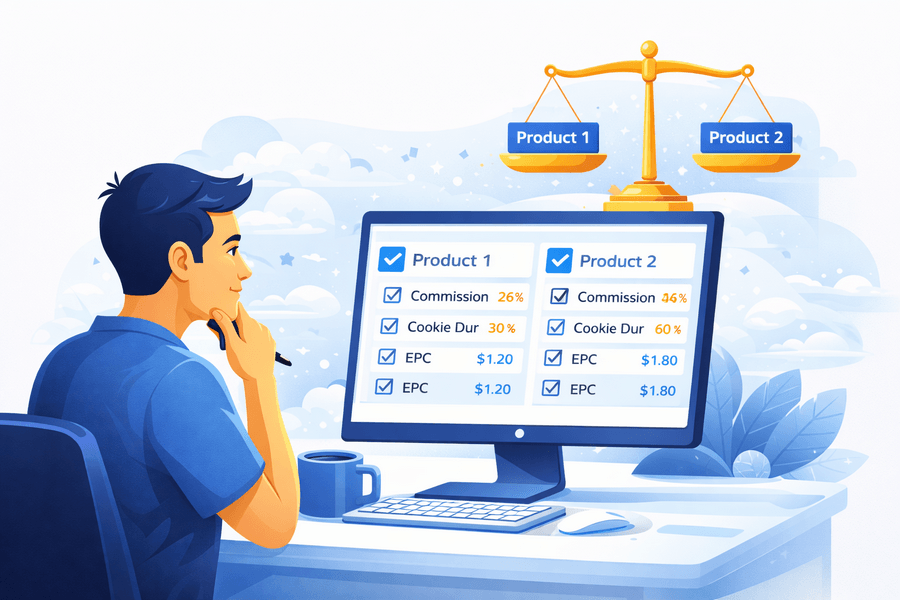
Choosing the right affiliate product is a strategic decision that directly determines your income potential and long-term credibility.
1. Relevance to Your Niche & Audience
The most important criterion of all. The product you promote must be directly relevant to the topics your blog covers and the problems your audience is trying to solve.
Ask yourself:
- Does this product solve a real problem my audience faces?
- Would my readers genuinely benefit from using this product?
- Does it align naturally with the content I already publish?
A blogging tips website promoting web hosting, SEO tools, and email marketing platforms will always outperform the same website promoting unrelated physical products — simply because the audience intent matches the offer.
2. Product Quality & Reputation
Never promote a product you would not personally recommend to a close friend. Your reputation as a blogger is your most valuable long-term asset — and a single poorly reviewed product recommendation can damage years of trust-building.
Before promoting any product, verify:
- Check customer reviews on G2, Trustpilot, Capterra, or Google
- Look for consistent positive feedback across multiple platforms
- Test the product yourself wherever possible — especially for involved affiliate marketing
- Avoid products with a high refund rate or widespread negative sentiment
3. Commission Rate & Structure
Not all commission structures are created equal. Evaluate the true earning potential of a program — not just the headline percentage.
What to look for:
| Factor | What to Aim For |
|---|---|
| Digital products (SaaS, courses) | 20%–50% commission |
| Physical products (Amazon, e-commerce) | 4%–15% commission |
| Recurring commissions | 20%–40% monthly per referral |
| High-ticket programs | $100–$1,000+ flat per sale |
| Two-tier programs | Additional 5%–10% on sub-affiliate sales |
💡 Pro Tip: Always calculate lifetime value per referral — not just the first commission. A recurring commission affiliate program paying $30/month for 18 months is far more valuable than a one-time $100 commission from a high-ticket product.
4. Cookie Duration
Cookie duration directly impacts how much credit you receive for your referrals. A longer cookie window means you earn commissions even when visitors do not buy immediately — which is how most purchasing decisions actually happen.
Cookie duration benchmarks:
- 24 hours — Amazon Associates (very short, requires high-volume traffic)
- 30 days — Industry standard minimum
- 60–90 days — Ideal for considered purchase products
- 180–365 days — Premium SaaS and high-ticket programs
Always prioritise programs with 30+ day cookie durations, especially for high-consideration products where buyers research extensively before purchasing.
5. EPC (Earnings Per Click) Benchmark
EPC is one of the most reliable indicators of a program’s real-world profitability. Most affiliate networks like Awin and CJ Affiliate display the average EPC for each merchant — use this data before committing to a program.
- EPC above $1.00 — Strong performer worth targeting
- EPC of $0.50–$1.00 — Decent, evaluate further
- EPC below $0.30 — Likely low-converting; proceed with caution
6. Payout Reliability & Payment Terms
Even a great commission rate means nothing if the merchant does not pay reliably. Before joining any program, research the following:
- Minimum payout threshold — Lower is better (aim for $50 or below)
- Payment frequency — Monthly, bi-weekly, or weekly?
- Payment methods — PayPal, bank transfer, Payoneer, cheque?
- Affiliate reviews — Search “[Program Name] affiliate review” on Google and forums like AffiliateFix or Warrior Forum.
Warning: Be cautious of lesser-known programs that promise extremely high commissions without verifiable track records. Always prioritise programs hosted on reputable networks like Impact.com, Awin, or PartnerStack.
7. Availability of Marketing Support & Creatives
A well-run affiliate program provides its affiliates with everything they need to promote effectively:
- Banners and display ads in multiple sizes
- Email swipe copy for newsletter promotions
- Dedicated affiliate manager for support and custom deals
- Product demo access or free trial for affiliates
- Regular performance updates and commission structure communications
Programs that invest in their affiliates’ success tend to convert significantly better than those that simply hand you a link and walk away.
8. Market Demand & Product Longevity
Avoid building your content strategy around products that are trending today but may be irrelevant tomorrow. Prioritise products with:
- Evergreen demand — Hosting, SEO tools, email marketing, financial services
- Established brand presence — Products people already search for by name
- Growing market segment — SaaS tools, AI products, online education platforms
- Renewal-based business model — Subscriptions ensure recurring commissions long-term
Product Selection Decision Framework
Use this quick checklist before committing to any affiliate product:
- Is it relevant to my niche and audience?
- Is the product quality verified (good reviews, low refund rate)?
- Is the commission rate competitive (20%+ for digital, recurring preferred)?
- Is the cookie duration 30 days or more?
- Is the EPC above $0.50 on the network?
- Does the program have a reliable payment history?
- Are marketing materials and support available?
- Does the product have long-term market relevance?
- Have I personally tested or thoroughly researched the product?
- Am I comfortable recommending this to my readers by name?
If you can answer YES to at least 8 out of 10** of these criteria, it is a program worth promoting.
💡 Key Takeaway: The best affiliate products are not always the ones with the highest commission rates — they are the ones that perfectly align with your audience’s needs, carry a strong reputation, offer competitive recurring or high-ticket payouts, and have proven conversion data behind them. Quality product selection is what separates affiliates earning ₹5,000/month from those earning ₹5,00,000/month.
Best Affiliate Networks & Programs in 2026
Choosing the right affiliate network is just as important as choosing the right product. The network you join determines the quality of merchants you access, the reliability of your payments, and the accuracy of your tracking data.
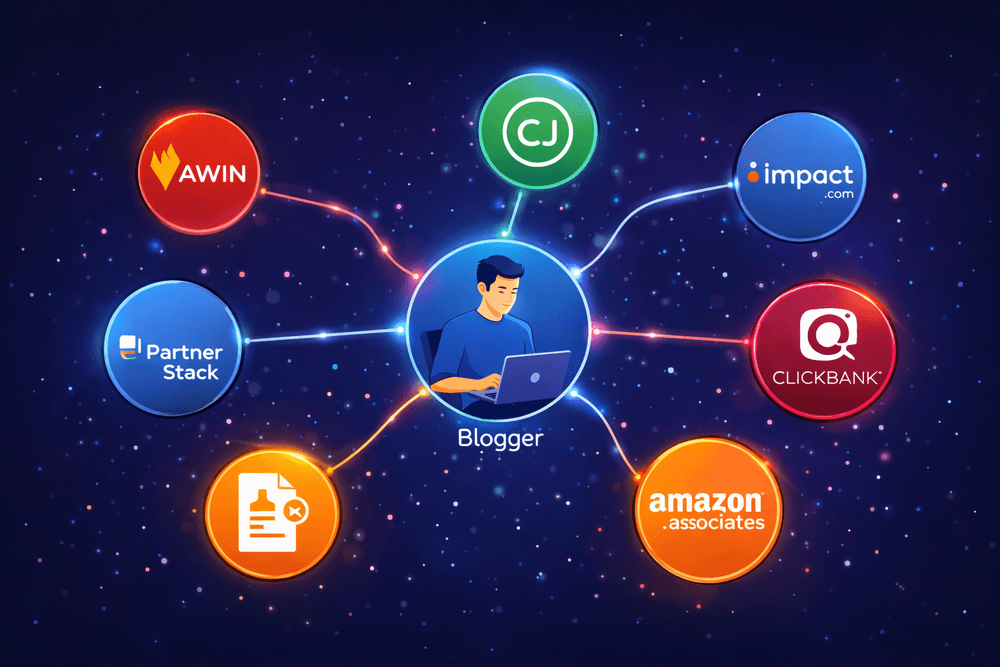
Here is a detailed breakdown of the best affiliate networks and programs available to bloggers and content creators in 2026:
1. Awin
Best For: Bloggers across all niches — especially lifestyle, fashion, retail, and software
Awin is one of the largest and most trusted global affiliate networks in the industry, operating across 180+ countries with over 25,000 advertisers on its platform. Having acquired Awin, Awin now combines the strengths of both networks under one powerful umbrella — making it the go-to starting point for most beginner and intermediate affiliate bloggers worldwide.
Key Highlights:
- 25,000+ merchants across all major niches globally
- Unified dashboard managing both Awin and Awin merchant programs
- Real-time tracking and transparent reporting
- Reliable monthly payments via bank transfer, BACS, or ACH
- Low minimum payout threshold of $20
- Strong mix of both physical and digital product programs
- Excellent publisher support with dedicated account management
Commission Range: Varies by merchant — typically 5% to 50%
Cookie Duration: Varies — typically 30 to 90 days
Best For: General bloggers, lifestyle, fashion, home, SaaS tools, international audiences
2. CJ Affiliate (Commission Junction)
Best For: Bloggers seeking partnerships with large, established global brands
CJ Affiliate is one of the largest and most reputable affiliate networks in the world, hosting programs from Fortune 500 companies and premium brands. It is particularly strong for finance, retail, travel, and technology niches.
Key Highlights:
- Access to premium brands like GoDaddy, Overstock, and IHG Hotels
- Advanced deep linking tools for precise product targeting
- Detailed performance analytics with real-time data
- Automated payment system with multiple currency support
- Higher approval standards — ideal for established bloggers
Commission Range: Varies — typically 3% to 30%
Cookie Duration: Varies — typically 30 to 120 days
Best For: Authority bloggers, finance, travel, retail, and technology niches
3. Impact.com
Best For: Bloggers targeting enterprise-level brands and premium partnerships
Impact.com has rapidly grown into one of the most sophisticated affiliate and partnership management platforms available in 2026. It powers affiliate programs for globally recognised brands, including Canva, Semrush, Hostinger, Fiverr, and Adidas.
Key Highlights:
- Home to many of the highest-paying affiliate programs in tech and SaaS
- Advanced contract management and custom commission structures
- Real-time fraud detection and accurate cross-device tracking
- Direct brand partnerships — often with better terms than network alternatives
- Intuitive dashboard with deep performance insights
Commission Range: Highly variable — $10 to $200+ per referral for top programs
Cookie Duration: Varies — typically 30 to 90 days
Best For: Established bloggers, tech reviewers, SaaS, and software content creators
4. PartnerStack
Best For: SaaS-focused bloggers and B2B content creators
PartnerStack is the #1 affiliate network specifically built for SaaS products — and it has become an essential platform for bloggers in the digital marketing, productivity, and business tools space in 2026.
Key Highlights:
- Hosts affiliate programs for leading SaaS tools, including SEMrush, Unbounce, Freshworks, and Rewardful
- Specialises in recurring commission structures — earn monthly for every active referral
- Clean, intuitive dashboard with excellent program discovery tools
- Automatic payments via PayPal or Stripe on a set monthly schedule
- Growing rapidly with new SaaS brands joining regularly
Commission Range: Typically 20% to 40% recurring monthly
Cookie Duration: Typically 90 days
Best For: Bloggers covering SaaS tools, productivity software, marketing platforms, B2B solutions
💡 Pro Tip: If you write about digital marketing tools, email marketing, SEO software, or business productivity — PartnerStack should be your first stop for affiliate program discovery. The recurring commission potential here is unmatched.
5. ClickBank
Best For: Digital product and online course promoters
ClickBank is one of the longest-running digital product marketplaces in the affiliate marketing world. It specialises in digital information products, online courses, health supplements, and software tools.
Key Highlights:
- Massive marketplace with thousands of digital products to promote
- Among the highest commission rates in the industry — up to 75% per sale
- Weekly or bi-weekly payment options
- No approval required for most products — instant access
- Built-in affiliate tools, including hoplinks and tracking pixels
Commission Range: Typically 30% to 75% per sale
Cookie Duration: Typically 60 days
Best For: Health & wellness bloggers, make-money-online niche, online course promoters
⚠️ Note: Product quality on ClickBank varies significantly. Always thoroughly vet any product before promoting — check refund rates and customer reviews carefully.
6. Amazon Associates
Best For: Bloggers in product review and physical goods niches
Amazon Associates remains the world’s largest affiliate program by merchant participation, giving affiliates access to millions of physical products across every category imaginable. While its commission rates are relatively low, its brand trust and conversion rates are unmatched for physical product content.
Key Highlights:
- Access to millions of products across every conceivable category
- Extremely high consumer trust — most visitors already have an Amazon account
- Universal cookie — earn commission on everything a visitor purchases within 24 hours, not just the referred product
- Easy integration with WordPress via product display plugins
- Ideal for “best of” listicles and product comparison content
Commission Range: 1% to 10%, depending on product category
Cookie Duration: 24 hours (shortest in the industry)
Best For: Tech, home, kitchen, books, baby products, lifestyle bloggers
💡 Strategy Tip: Use Amazon Associates for supplementary income on physical product posts, but do not rely on it as your primary affiliate income source. Pair it with higher-commission SaaS or recurring programs for a balanced income mix.
7. Rakuten Advertising
Best For: Fashion, luxury retail, and premium lifestyle bloggers
Rakuten Advertising is a premium affiliate network with a strong focus on retail, fashion, and lifestyle brands. It hosts programs from well-known brands, including Walmart, Best Buy, and New Balance.
Key Highlights:
- Access to top-tier retail and fashion brands globally
- Strong international merchant base — excellent for multilingual bloggers
- Advanced reporting with cross-device attribution
- Dedicated account management for high-performing affiliates
- Trusted payment system with multiple currency options
Commission Range: Typically 3% to 20%
Cookie Duration: Typically 30 to 45 days
Best For: Fashion, luxury, retail, and lifestyle content creators
Affiliate Network Comparison at a Glance
| Network | Best Niche | Commission | Cookie Duration | Recurring? |
|---|---|---|---|---|
| Awin | All niches, global | 5%–50% | 30–90 days | Some programs |
| CJ Affiliate | Finance, retail, travel | 3%–30% | 30–120 days | Some programs |
| Impact.com | Tech, SaaS, enterprise | $10–$200+ | 30–90 days | Some programs |
| PartnerStack | SaaS & B2B tools | 20%–40% | 90 days | ✅ Yes — most programs |
| ClickBank | Digital products, health | 30%–75% | 60 days | Some programs |
| Amazon Associates | Physical products | 1%–10% | 24 hours | ❌ No |
| Rakuten | Fashion, retail, luxury | 3%–20% | 30–45 days | Some programs |
Recommended Network Combination for Bloggers
Rather than joining every network at once, start with this proven combination based on your blogging niche:
- For bloggers covering tools, software & digital marketing: → PartnerStack + Impact.com + Awin
- For bloggers covering product reviews & lifestyle: → Amazon Associates + Awin + Rakuten
- For bloggers in the make-money-online or internet marketing niche: → ClickBank + CJ Affiliate + Impact.com
💡 Key Takeaway: Do not spread yourself thin across every network simultaneously. Start with 2–3 networks that align closely with your niche, master their dashboards and program selection, and scale from there. The best affiliate networks in 2026 reward affiliates who bring consistent, high-quality traffic — not those who join the most programs
Best Affiliate Marketing Tools in 2026
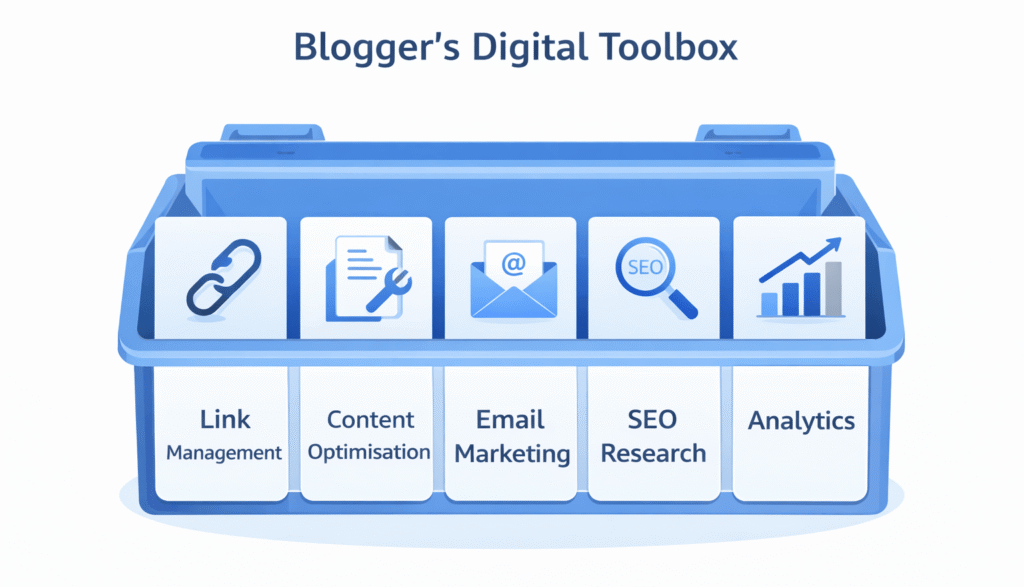
The right tools can be the difference between an affiliate blog that struggles to gain traction and one that consistently ranks, converts, and scales. In 2026, top affiliate marketers leverage a focused stack of tools across five core categories — link management, content optimisation, email marketing, SEO research, and analytics.
Here is your complete toolkit:
Category 1: Affiliate Link Management Tools
1. ThirstyAffiliates
Best For: WordPress bloggers who need reliable link cloaking and management
ThirstyAffiliates is the #1 affiliate link management plugin for WordPress — and an absolute essential for any serious affiliate blogger. It converts long, ugly affiliate URLs into clean, branded links while providing detailed click tracking data.
Key Features:
- Link cloaking — Transform
/?ref=xyzabc123into/recommends/tool-name - Automatic keyword linking — Auto-insert affiliate links across existing content
- Click tracking & reporting — Monitor which links get the most engagement
- Link health monitoring — Get alerts when affiliate links break or redirect
- Geolocation targeting — Direct visitors to country-specific affiliate offers
Pricing: Free plan available; Pro starts at $99.60/year
Best For: All WordPress affiliate bloggers — beginner to advanced
2. Pretty Links
Best For: Bloggers who want simple, lightweight link cloaking with redirect management
Pretty Links is a popular alternative to ThirstyAffiliates, offering clean link redirection with a simple, intuitive interface. It is particularly well-suited for bloggers who need basic link management without the complexity of a full affiliate suite.
Key Features:
- Simple link cloaking and redirect management
- Click tracking with geographic and device data
- Link categorisation and tagging
- Integration with popular email marketing platforms
Pricing: Free plan available; Pro starts at $99.50/year
Category 2: Content Optimisation Tools
1. Surfer SEO
Best For: Affiliate bloggers who want data-driven, search-optimised content
Surfer SEO has become the gold standard for on-page content optimisation in 2026. It analyses the top-ranking pages for your target keyword and gives you a precise, data-backed content brief — telling you exactly what topics to cover, how long your article should be, and which semantic keywords to include.
Key Features:
- Content Editor — Real-time SEO score as you write
- SERP Analyser — Deep analysis of top-ranking competitor pages
- Keyword Research — Discover topically related keywords to cover
- Content Audit — Identify and fix underperforming existing posts
- AI Writing Assistant — Generate SEO-optimised content drafts
- Integration with Google Docs and WordPress
Pricing: Starts at $89/month
Best For: Serious affiliate bloggers focused on organic search traffic
2. NeuronWriter
Best For: Budget-conscious bloggers who need Surfer SEO-level optimisation at a lower price

NeuronWriter offers similar content optimisation capabilities to Surfer SEO at a significantly lower price point — making it an excellent choice for bloggers who are building their affiliate income and managing costs carefully.
Key Features:
- NLP-based content recommendations
- Competitor content analysis
- Content scoring and optimisation suggestions
- Semantic keyword recommendations
- Lifetime deal available on AppSumo
Pricing: Starts at $19/month (significantly more affordable than Surfer SEO)
Best For: Budget-conscious bloggers and beginners
Category 3: Email Marketing Tools
1. ConvertKit (now Kit)
Best For: Bloggers and content creators building audience-first email lists

ConvertKit — rebranded as Kit in 2024 — remains the #1 email marketing platform for bloggers and content creators in 2026. Its creator-first approach, powerful automation, and clean interface make it the ideal tool for building the email list that powers your affiliate promotions.
Key Features:
- Visual automation builder — Create sophisticated email sequences visually
- Subscriber tagging and segmentation — Send hyper-targeted affiliate promotions
- Landing page builder — Capture leads without a separate tool
- Commerce features — Sell digital products alongside affiliate promotions
- Creator Network — Grow your list through cross-promotions with other creators
- Excellent affiliate program — 30% recurring commission for 24 months
Pricing: Free up to 10,000 subscribers; paid plans from $25/month
Best For: Bloggers, content creators, course creators, affiliate marketers
2. GetResponse
Best For: Bloggers who want an all-in-one marketing suite beyond just email

GetResponse offers a comprehensive all-in-one marketing platform that combines email marketing, landing pages, webinar hosting, and marketing automation under one roof — making it ideal for affiliate marketers who want to consolidate their tool stack.
Key Features:
- Email marketing with advanced automation workflows
- Landing page builder with conversion-optimised templates
- Webinar hosting — ideal for promoting high-ticket affiliate products
- Paid ads integration — Google and Facebook ad management
- Ecommerce tools and abandoned cart automation
- Strong affiliate programme with recurring commissions
Pricing: Free plan available; paid plans from $19/month
Best For: Affiliate marketers running multi-channel campaigns
Category 4: SEO & Keyword Research Tools
1. Ahrefs
Best For: Serious affiliate bloggers who want the most comprehensive SEO data available
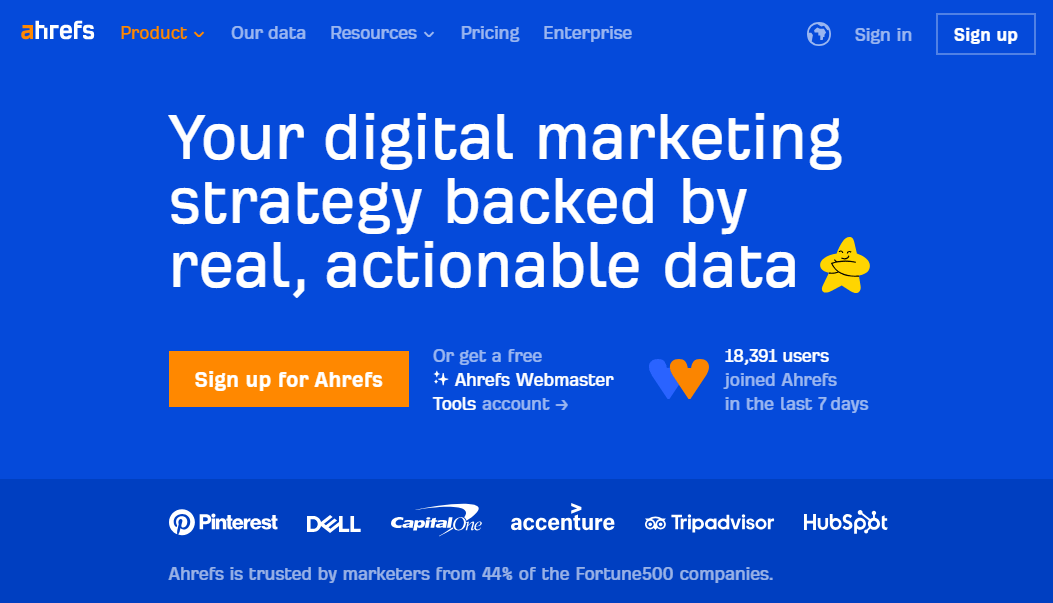
Ahrefs is widely regarded as the most powerful SEO tool suite available in 2026 — trusted by SEO professionals, agency owners, and top affiliate marketers worldwide. Its backlink database, keyword explorer, and content gap analysis tools are industry-leading.
Key Features:
- Keywords Explorer — Discover thousands of affiliate keyword opportunities with accurate search volume and difficulty data
- Site Explorer — Analyse competitor affiliate sites for their top pages and keywords
- Content Gap Tool — Find keywords your competitors rank for that you do not
- Site Audit — Identify and fix technical SEO issues on your blog
- Rank Tracker — Monitor your keyword rankings over time
- Backlink Analysis — Understand your link profile and find link-building opportunities
Pricing: Starts at $129/month
Best For: Established affiliate bloggers and SEO-focused content creators
2. SEMrush
Best For: Affiliate bloggers who want SEO, content marketing, and PPC data in one platform
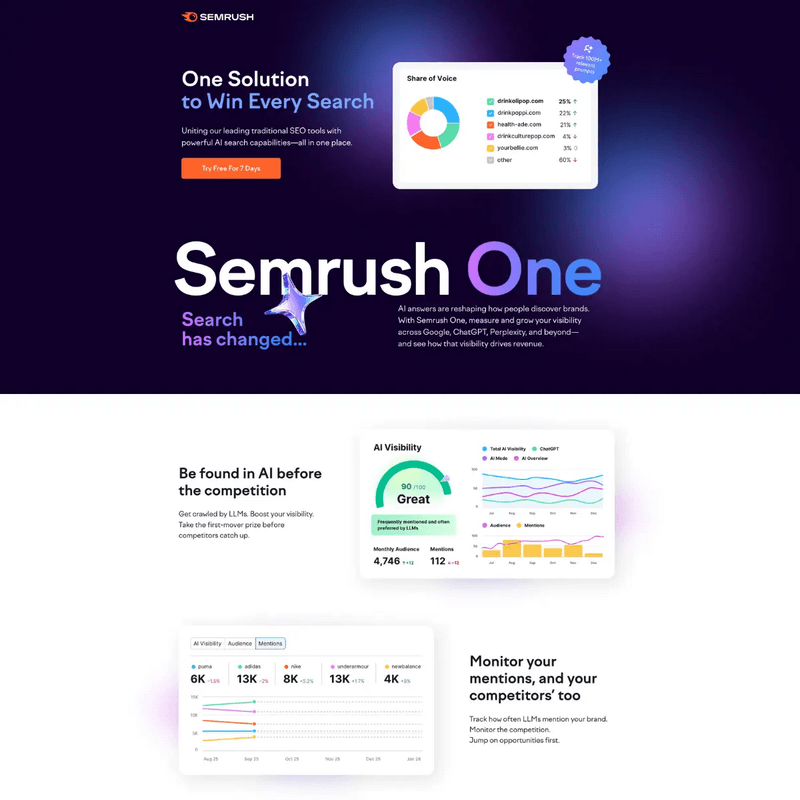
SEMrush is a comprehensive digital marketing suite that combines SEO, content marketing, competitive research, PPC analysis, and social media tools — all accessible from a single dashboard.
Key Features:
- Keyword Magic Tool — 25+ billion keywords with granular filtering
- Position Tracking — Daily rank monitoring for target keywords
- Content Marketing Toolkit — Topic research, SEO writing assistant, content audit
- Competitor Analysis — Discover what is driving traffic to competitor affiliate sites
- On-Page SEO Checker — Actionable recommendations for each page
- Backlink Analytics — Monitor and build your link profile
Pricing: Starts at $139.95/month
Best For: Affiliate bloggers running multi-channel campaigns across SEO, content, and ads
💡 Ahrefs vs SEMrush: Use Ahrefs if backlink analysis and keyword research are your primary focus. Choose SEMrush if you also need content marketing tools, PPC data, and competitor advertising insights in one platform.
Category 5: Analytics & Tracking Tools
1. Google Analytics 4 (GA4)
Best For: All affiliate bloggers — free, essential, non-negotiable

Google Analytics 4 is the free, industry-standard web analytics platform that every affiliate blogger must have installed from day one. It provides comprehensive data on your audience, traffic sources, user behaviour, and conversion performance.
Key Features:
- Traffic source analysis — Understand exactly where your visitors come from
- User behaviour tracking — See which pages drive the most engagement
- Conversion tracking — Set up goals for affiliate link clicks and form submissions
- Audience insights — Demographics, devices, locations, and interests
- Integration with Google Search Console — Combined organic search and on-site data
- Predictive metrics — AI-powered insights on likely purchasers
Pricing: Free
Best For: Every affiliate blogger, regardless of experience level
2. Google Search Console
Best For: Understanding your organic search performance directly from Google
Google Search Console provides first-party data directly from Google — showing you exactly which keywords are driving impressions and clicks to your affiliate content, your average ranking positions, and any technical issues Google has identified on your site.
Key Features:
- Keyword performance data (impressions, clicks, CTR, position)
- Page-level performance breakdown
- Core Web Vitals and mobile usability reports
- Index coverage and crawl issue alerts
- Link report — internal and external links pointing to your site
Pricing: Free
Best For: Every affiliate blogger as a complement to GA4
Affiliate Marketer’s Tool Stack at a Glance
| Tool | Category | Best For | Pricing |
|---|---|---|---|
| ThirstyAffiliates | Link Management | WordPress link cloaking | From $99.60/yr |
| Pretty Links | Link Management | Simple link redirects | From $99.50/yr |
| Surfer SEO | Content Optimisation | Data-driven content briefs | From $89/mo |
| NeuronWriter | Content Optimisation | Budget-friendly optimisation | From $19/mo |
| ConvertKit (Kit) | Email Marketing | Blogger email lists | Free – $25/mo |
| GetResponse | Email Marketing | All-in-one marketing | Free – $19/mo |
| Ahrefs | SEO Research | Backlinks & keyword data | From $129/mo |
| SEMrush | SEO Research | Full digital marketing suite | From $139.95/mo |
| Google Analytics 4 | Analytics | Website traffic & behaviour | Free |
| Google Search Console | Analytics | Organic search performance | Free |
Recommended Starter Tool Stack for Bloggers
If you are just getting started and want the most impactful tools for the lowest investment, begin with this focused stack:
- ThirstyAffiliates — Link management (essential from day one)
- NeuronWriter — Affordable content optimisation
- ConvertKit (Kit) — Email list building (free up to 10,000 subscribers)
- Google Analytics 4 — Free traffic and behaviour analytics
- Google Search Console — Free organic search data
Total monthly cost to start: As low as $19/month — with two of the five tools completely free.
💡 Key Takeaway: You do not need every tool on this list to start earning from affiliate marketing. Begin with the free essentials (GA4 + Search Console), add ThirstyAffiliates for link management, and invest in content optimisation and email marketing tools as your traffic and income grow. A lean, well-chosen tool stack will always outperform an expensive, underutilised one.
Affiliate Marketing Content Types That Convert
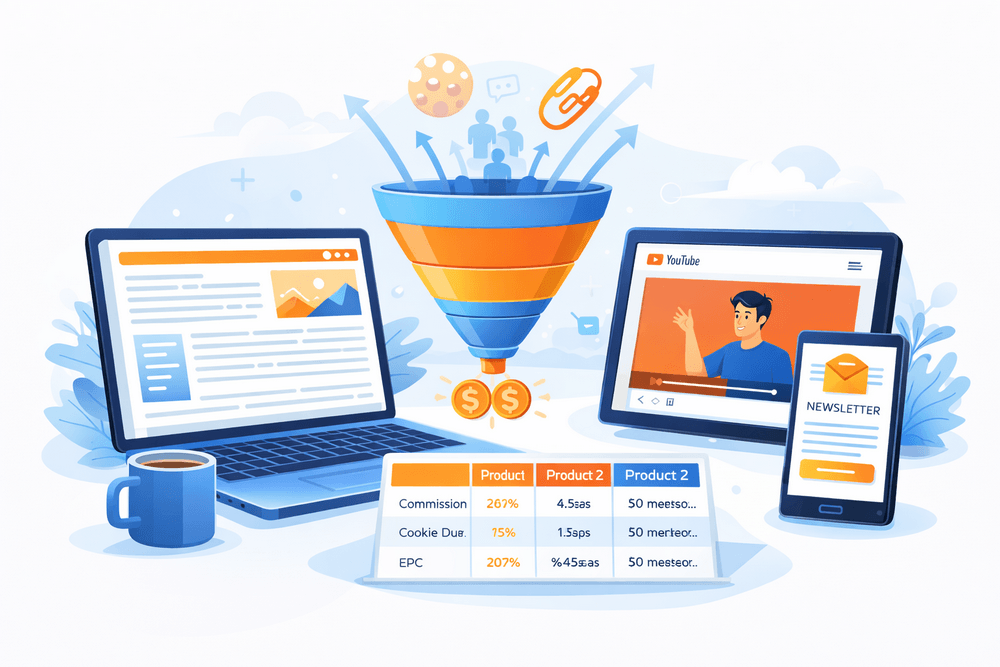
Publishing content without a conversion strategy is one of the most common mistakes affiliate bloggers make.
Not all content types are equal — some are designed purely for traffic, while others are built specifically to drive purchasing decisions. In 2026, the most successful affiliate bloggers combine multiple content formats to capture visitors at every stage of the buyer’s journey.
Here are the highest-converting affiliate content types you must master:
1. In-Depth Product Reviews
Conversion Potential: 🔴 Very High
The product review is the backbone of affiliate marketing content. A well-written, honest, and comprehensive review targets buyers who are already in the consideration or decision stage — meaning they are actively evaluating whether to purchase the product.
What makes a high-converting product review:
- Personal, first-hand experience with the product (E-E-A-T signal)
- Clear structure: Overview → Key Features → Pros & Cons → Pricing → Verdict
- Honest assessment — include genuine limitations, not just positives
- Real screenshots, demo videos, and data from actual usage
- A clear, compelling Call-to-Action (CTA) with your affiliate link
- Updated regularly with the latest pricing and feature changes
Example: “Surfer SEO Review 2026: Is It Worth the Investment for Bloggers?”
💡 Pro Tip: The most trusted reviews answer the question every reader has but rarely asks out loud: “Would YOU personally recommend this product if you were not earning a commission?” — Answer that question honestly and your conversions will follow.
2. Comparison Posts (Product A vs. Product B)
Conversion Potential: 🔴 Very High
Comparison posts target visitors with extremely high commercial intent — people who have already narrowed their choices down to two or three options and simply need help making the final decision. These posts consistently deliver some of the highest conversion rates of any affiliate content format.
Winning comparison post structure:
- Brief introduction, positioning both products
- Side-by-side feature comparison table (increases scannability)
- Individual section for each product’s strengths
- Clear recommendation: “Who should choose Product A vs. Product B?”
- Pricing comparison with affiliate CTAs for both options
- FAQ addressing the most common decision-making questions
Example: “Ahrefs vs SEMrush 2026: Which SEO Tool Is Right for Your Blog?”
Why it works: Visitors landing on comparison posts have already decided to buy — they just need confirmation that they are making the right choice. Your job is simply to guide that decision confidently.
3. “Best Of” Listicles
Conversion Potential: 🟠 High
Best-of listicles — such as “10 Best Email Marketing Tools for Bloggers” — are among the most searched content formats on Google for commercial keywords. They capture readers who are in the early-to-mid research phase and have not yet settled on a single product.
What makes a high-converting listicle:
- Target keywords with clear commercial intent (“best [product category] for [audience]”)
- Include 8 to 15 products for comprehensive coverage without overwhelming readers
- Brief, scannable overview for each product with key highlights
- Clear #1 recommended pick prominently positioned
- Comparison table summarising all listed products
- Individual affiliate CTAs for each product
Example: “13 Best Affiliate Marketing Tools for Bloggers in 2026”
💡 SEO Tip: Update your best-of listicles at least once every 6 months with new products, updated pricing, and refreshed screenshots. Google actively rewards freshness signals on commercial listicle content.
4. Step-by-Step Tutorial & How-To Posts
Conversion Potential: 🟠 High
Tutorial posts show readers exactly how to use a product to achieve a specific outcome. They are particularly effective because they demonstrate the product’s value in action — making the affiliate recommendation feel natural, helpful, and credible rather than promotional.
Best tutorial content formats for affiliates:
- “How to Set Up ConvertKit for Your Blog (Step-by-Step)”
- “How to Do Keyword Research Using Ahrefs in 2026”
- “How to Cloak Affiliate Links in WordPress Using ThirstyAffiliates”
Structure for a high-converting tutorial:
- Clear statement of what the reader will achieve
- Prerequisites section (including link to the product with affiliate link)
- Numbered step-by-step instructions with screenshots
- Common mistakes to avoid
- Results/outcome summary with CTA to get started
Why it converts: Readers following a tutorial are already using or evaluating the tool — placing your affiliate CTA at the end of a tutorial is the most natural, non-pushy conversion placement possible.
5. Resource & Tools Pages
Conversion Potential: 🟠 High (Passive)
A dedicated “Tools I Use” or “Recommended Resources” page on your blog is one of the most passive yet consistently converting affiliate content assets you can create. Visitors who seek out your resources page are already highly trusting of your recommendations — making them among the warmest prospects on your entire site.
What to include on your resources page:
- Organised by category (Hosting, SEO Tools, Email Marketing, Design, etc.)
- Brief 2–3 sentence explanation of why you personally use each tool
- Star rating or recommendation level for each product
- Direct affiliate links with clear disclosure
- Regular updates as your toolkit evolves
Example: “BloggingDen’s Recommended Blogging Tools & Resources 2026”
💡 Internal Link Opportunity: Link to your Resources page from your blog’s navigation menu, About page, and every relevant blog post. High visibility placement = consistent passive commissions.
6. Alternative Posts
Conversion Potential: 🟠 High
Alternative posts — such as “Best Alternatives to [Popular Tool]” — capture a highly specific and commercially valuable segment of searchers: people who are dissatisfied with a product they are already using and actively looking to switch.
Why these posts are goldmines:
- Visitors are already willing to pay — they just want a better option
- Often has lower keyword competition than direct product reviews
- High conversion rates due to strong purchase intent
- Easy to update when new alternatives emerge
Example: “7 Best Surfer SEO Alternatives for Bloggers in 2026 (Cheaper Options)”
7. Case Studies & Income Reports
Conversion Potential: 🟡 Medium-High
Case studies and income reports build exceptional trust and credibility with your audience. When you share real results — traffic numbers, conversion rates, actual earnings — you validate the effectiveness of the products you promote through concrete, verifiable proof.
Effective formats:
- “How I Earned ₹50,000 in Affiliate Commissions Last Month (Breakdown).”
- “How I Grew My Blog to 50,000 Monthly Visitors Using These 5 Tools”
- “My Honest 90-Day Experiment with [Product]: Results & Verdict.”
Why it works: In an era of AI-generated generic content, real human experience and transparent data stand out dramatically — building the kind of deep reader trust that converts consistently over time.
8. Email Newsletter Affiliate Promotions
Conversion Potential: 🔴 Very High (for warm audiences)
Your email list is your highest-converting affiliate traffic channel — bar none. Subscribers who opted in to receive your content are already warm, trusting, and engaged. Affiliate recommendations sent via email consistently outperform the same recommendations on cold organic traffic.
High-converting email affiliate formats:
- Dedicated product recommendation emails — Single-focus, one CTA
- Curated weekly newsletters — Multiple tools or resources with brief descriptions
- Automated welcome sequences — Introduce your top affiliate recommendations to new subscribers
- Promotional broadcast emails — Time-sensitive offers, discount codes, free trials
Content Type Selection by Buyer Stage
| Buyer Stage | State of Mind | Best Content Type |
|---|
| Awareness | “I have a problem to solve” | How-to tutorials, educational guides |
| Consideration | “What solutions exist?” | “I have a problem to solve.” |
| Decision | “Which one should I choose?” | Reviews, comparison posts |
| Loyalty | “What else do you recommend?” | Resources page, email newsletters |
💡 Key Takeaway: The most profitable affiliate content strategy in 2026 is not about publishing the most content — it is about publishing the right content types for each stage of your reader’s buying journey. Lead with tutorials and listicles to attract traffic, convert with reviews and comparisons, and retain with resources pages and email newsletters. Master this content mix and your affiliate income will grow predictably and consistently.
Affiliate Marketing Mistakes Every Beginner Must Avoid
Affiliate marketing looks deceptively simple from the outside — but the reality is that most beginners make the same avoidable mistakes that cost them months of wasted effort and lost income. Learning from these pitfalls before you make them is one of the fastest ways to accelerate your affiliate marketing success.
Here are the most common affiliate marketing mistakes and exactly how to avoid them:
1. Promoting Too Many Products at Once
The Mistake: Joining every affiliate program available and stuffing your blog with dozens of unrelated product recommendations in the hope that something converts.
Why does it hurt you?
- Dilutes your content focus and confuses your readers
- Spreads your promotional effort too thin across too many programs
- Signals to Google that your content is purely commercial — not genuinely helpful
- Makes your blog feel like a catalogue rather than a trusted resource
The Fix: Start with 3 to 5 highly relevant, thoroughly vetted products that directly serve your audience’s core needs. Master promoting those products before expanding your affiliate portfolio. Depth of promotion always outperforms breadth.
2. Not Disclosing Affiliate Links (FTC Compliance)
The Mistake: Publishing affiliate content without clearly informing readers that your links are monetised — either out of ignorance or fear that disclosure will reduce conversions.
Why it hurts you:
- Violates FTC guidelines (and similar regulations in the EU and India)
- Exposes you to potential legal penalties and account terminations
- Severely damages reader trust when discovered — and readers always find out
- Can result in Google manual penalties for deceptive site practices
The Fix: Add a clear, prominent affiliate disclosure at the very top of every post containing affiliate links — before the reader engages with any content. A simple statement like:
“This post contains affiliate links. If you purchase through these links, I may earn a commission at no additional cost to you.”
This is not optional — it is both a legal requirement and a trust signal that actually improves your relationship with your audience.
3. Ignoring SEO and Relying Solely on Social Traffic
The Mistake: Publishing affiliate content and depending entirely on social media shares, Facebook groups, or Pinterest traffic for visitors — without any SEO strategy in place.
Why it hurts you:
- Social media traffic is inconsistent, algorithm-dependent, and short-lived
- A single platform algorithm change can eliminate your traffic overnight
- Without SEO, your content has no long-term compounding value
- You miss the highest-converting traffic source: organic search visitors with purchase intent
The Fix: Build your affiliate content strategy around SEO-first keyword targeting from day one. Target commercial intent keywords with manageable competition, optimise every post for on-page SEO, and build topical authority through content clusters. Organic search traffic compounds over time — social media traffic does not.
4. Choosing Low-Commission Products Over High-Value Programs
The Mistake: Defaulting to Amazon Associates for every product recommendation simply because it is familiar and easy, ignoring far more lucrative SaaS affiliate programs and recurring commission affiliate programs.
Why it hurts you:
- Amazon’s 1%–4% commissions on most categories require enormous traffic volumes to generate meaningful income
- The 24-hour cookie window means you lose credit for most considered purchases
- You could earn the same income from 10x fewer referrals with a quality SaaS program
The Fix: Audit your current affiliate program mix. For every Amazon product you promote, ask: “Is there a SaaS tool, digital product, or high-ticket program that serves the same audience need — with a better commission structure?” Prioritise recurring commissions and high-ticket affiliate marketing opportunities wherever your niche allows.
5. Not Building an Email List From Day One
The Mistake: Focusing entirely on SEO and social traffic while delaying email list building — telling yourself you will “start the email list later when you have more traffic.”
Why it hurts you:
- Later rarely comes — and every day without an email list is a day of lost subscribers
- You have zero ownership over search rankings or social media followers — but you own your email list completely
- A Google algorithm update can eliminate 50% of your organic traffic overnight — your email list remains unaffected
- Email subscribers convert at 3x to 5x higher rates than cold organic visitors
The Fix: Install an email opt-in form on your blog before you publish your first post. Offer a simple lead magnet — a checklist, resource guide, or mini-course — to incentivise signups. Even collecting 10 subscribers per day compounds into a powerful affiliate revenue channel within 12 months.
6. Writing Thin, Generic Affiliate Content
The Mistake: Publishing short, surface-level product reviews and best-of lists that simply repackage information already available on the merchant’s own website — with no original insight, personal experience, or genuine value added.
Why it hurts you:
- Google’s Helpful Content System actively penalises thin affiliate content that adds no unique value
- Readers immediately recognise generic content and bounce — destroying your conversion rates
- Thin content rarely earns backlinks — limiting your ability to rank for competitive keywords
- You become indistinguishable from thousands of other affiliate sites covering the same products
The Fix: Only publish affiliate content based on genuine first-hand product experience. Add original screenshots, real usage data, honest limitations, and your personal verdict. Ask yourself before hitting publish: “Does this post help my reader make a better decision than any other page on Google?” If the answer is no, rewrite it until it is.
7. Ignoring Mobile Optimisation
The Mistake: Designing affiliate content and CTAs primarily for desktop visitors — ignoring the fact that over 65% of affiliate traffic now arrives from mobile devices.
Why it hurts you:
- Poor mobile experience directly increases bounce rates and reduces time on page
- Google’s mobile-first indexing means a bad mobile experience hurts your search rankings
- Affiliate CTAs that are hard to tap on mobile significantly reduce conversion rates
- Slow mobile page load times (above 3 seconds) cause the majority of mobile visitors to leave immediately
The Fix: Test every affiliate post on mobile before publishing. Ensure your:
- The theme is fully responsive and mobile-optimised
- CTA buttons are large, thumb-friendly, and above the fold
- Comparison tables are horizontally scrollable on small screens
- Page loads in under 3 seconds on mobile (use Google PageSpeed Insights to test)
8. Not Tracking Affiliate Link Performance
The Mistake: Publishing affiliate content and never analysing which links, pages, or traffic sources are actually generating commissions — essentially operating blind.
Why it hurts you:
- You cannot improve what you do not measure
- Without tracking data, you waste time updating low-performing content instead of doubling down on what works
- You miss opportunities to optimise CTA placement, anchor text, and link positioning
- Budget and effort get allocated incorrectly across your content portfolio
The Fix: Use ThirstyAffiliates or Pretty Links to track clicks on every individual affiliate link. Connect Google Analytics 4 to monitor which pages drive the most affiliate traffic. Review your affiliate network dashboards monthly to identify your top-converting programs and pages — then invest more content effort in those areas.
9. Neglecting to Update Old Affiliate Content
The Mistake: Publishing affiliate reviews and listicles and never revisiting them — allowing pricing information, feature sets, and product recommendations to become dangerously outdated.
Why it hurts you:
- Outdated pricing or discontinued products destroy reader trust instantly
- Google de-prioritises stale content that has not been refreshed
- Competitors who regularly update their content will outrank your older posts
- Affiliate programs change their commission structures — you may be promoting a program that now pays significantly less
The Fix: Conduct a content audit every 3–6 months. Prioritise updating your highest-traffic affiliate posts first — refresh pricing, update screenshots, add new products, and remove discontinued ones. Add a visible “Last Updated” date to signal freshness to both readers and Google.
10. Treating Affiliate Marketing as a Get-Rich-Quick Scheme
The Mistake: Expecting significant affiliate income within weeks of starting — and giving up when results do not materialise immediately.
Why it hurts you:
- Unrealistic expectations lead to inconsistency — the single biggest killer of affiliate marketing success
- Most affiliate blogs take 6 to 12 months to generate meaningful organic traffic
- Quitting too early means abandoning content that was weeks away from ranking and converting
The Fix: Treat affiliate marketing as a long-term business — not a quick income hack. Set realistic milestones:
- Month 1–3: Foundation — blog setup, first 10–15 posts published, programs joined
- Month 3–6: Growth — content compounding, first organic rankings appearing
- Month 6–12: Momentum — consistent traffic, first regular commissions
- Month 12+: Scale — optimise top performers, expand content, diversify programs
The bloggers earning ₹1,00,000+ per month from affiliate marketing are not smarter than you — they simply stayed consistent longer.
Common Mistakes Quick Reference
| Mistake | Impact | Commit to a 12-month timeline |
|---|---|---|
| Promoting too many products | Diluted focus, low trust | Focus on 3–5 core products |
| No affiliate disclosure | Legal risk, trust damage | Add FTC disclosure to every post |
| Ignoring SEO | Inconsistent traffic | Commit to a 12-month timeline |
| Over-relying on Amazon Associates | Build an SEO-first content strategy | Add SaaS & recurring programs |
| No email list | Zero audience ownership | Start list building from day one |
| Thin, generic content | Google penalties, low conversions | Add first-hand experience & depth |
| Poor mobile optimisation | High bounce rate, ranking drop | Test and optimise for mobile |
| No link tracking | Flying blind | Use ThirstyAffiliates + GA4 |
| Never updating old content | Stale rankings, lost trust | Audit content every 3–6 months |
| Expecting quick results | Early quitting | Commit to 12-month timeline |
💡 Key Takeaway: Every mistake on this list is entirely avoidable with the right knowledge and systems in place. The most successful affiliate bloggers in 2026 are not those who never made mistakes — they are those who identified these pitfalls early, corrected course quickly, and stayed consistent through the inevitable slow periods. Bookmark this section and revisit it every 90 days as a self-audit checklist.
Frequently Asked Questions About Affiliate Marketing
What is affiliate marketing in simple terms?
Affiliate marketing is a performance-based earning model where you promote someone else’s product or service using a unique tracking link. When someone clicks your link and makes a purchase, you earn a commission. You do not need to create a product, handle inventory, or manage customer support — making it one of the most accessible online income models available.
How much money can you earn from affiliate marketing?
Affiliate marketing income varies widely based on your niche, traffic, and program selection. Beginners typically earn ₹5,000–₹20,000 per month in their first year. Established affiliate bloggers with quality traffic commonly earn ₹1,00,000–₹5,00,000+ per month. There is no fixed ceiling — your income scales directly with the quality of your content and the size of your audience.
Is affiliate marketing still profitable in 2026?
Absolutely. The global affiliate marketing industry surpassed $17 billion in 2025 and is expected to continue growing rapidly in 2026. With the rise of SaaS affiliate programs, recurring commission structures, and creator-led commerce, affiliate marketing remains one of the most profitable and sustainable online business models available to bloggers and content creators today.
Can you do affiliate marketing without a website?
Yes — you can promote affiliate products through YouTube channels, email newsletters, social media platforms like Instagram and TikTok, or a Quora presence. However, a self-hosted WordPress blog remains the most reliable, scalable, and SEO-friendly platform for long-term affiliate marketing success, giving you full ownership and control over your content and audience.
How long does it take to make money from affiliate marketing?
Most affiliate bloggers begin seeing their first commissions within 3 to 6 months of consistent publishing. Meaningful, reliable income typically develops between months 6 and 12 as content ranks organically on Google. Success depends on your niche competitiveness, content quality, keyword strategy, and publishing consistency. Patience and persistence are non-negotiable in affiliate marketing.
Is affiliate marketing legal?
Yes, affiliate marketing is completely legal worldwide — including in India. However, it is legally required to disclose affiliate relationships to your audience on every post containing affiliate links, as per FTC guidelines and similar regulations globally. Transparent disclosure protects both you and your readers while building long-term credibility and trust with your audience.
What is the best affiliate program for beginners?
For bloggers just starting out, Amazon Associates is the easiest entry point due to its simple approval process and vast product selection. However, for higher long-term earnings, beginner bloggers should also join Awin and PartnerStack early — particularly for SaaS and digital product programs that offer recurring commissions and significantly higher earning potential per referral.
How many affiliate programs should I join as a beginner?
Start with 2 to 3 programs that are directly relevant to your niche and audience. Joining too many programs too early dilutes your focus and makes it difficult to create genuinely compelling content for each product. Master promoting a small selection of high-quality products first, then gradually expand your affiliate portfolio as your traffic and confidence grow.
Do I need a large audience to succeed in affiliate marketing?
No — audience size matters far less than audience quality and targeting. A blog with 5,000 monthly visitors in a highly targeted niche can consistently outperform a general blog with 50,000 monthly visitors. Focused, purchase-intent traffic from well-researched SEO content converts significantly better than large volumes of unqualified social media traffic.
What is the difference between an affiliate network and an affiliate program?
An affiliate program is run directly by a single merchant — for example, Bluehost’s own affiliate program. An affiliate network like Awin, Impact.com, or PartnerStack hosts hundreds or thousands of individual merchant programs under one unified platform, handling tracking, reporting, and payments on behalf of all parties. Networks make it easier to discover and manage multiple programs simultaneously.
How do I start affiliate marketing for beginners with no money?
You can start affiliate marketing for beginners with zero investment by using free platforms — a YouTube channel, a TikTok account, or a free blog on Blogger.com. Join free affiliate programs like Amazon Associates or Awin, create helpful content, and include your affiliate links. Once you earn your first commissions, reinvest them into a self-hosted WordPress blog for long-term scalability.
What is the best niche for affiliate marketing for beginners?
The best niches for affiliate marketing beginners are web hosting & blogging, personal finance, SaaS tools, and health & wellness — because all four have strong affiliate programs with good commissions and proven buyer demand.
Conclusion: Your Affiliate Marketing Journey Starts Today
Affiliate marketing for beginners in 2026 is not just an opportunity — it is one of the most powerful, proven, and accessible income streams available to bloggers, content creators, and digital entrepreneurs worldwide. From understanding the fundamentals of how it works to mastering the latest affiliate marketing trends for 2026, you now have everything you need to build a sustainable, profitable affiliate business from the ground up.
Let us quickly recap what you have learned in this guide:
- What affiliate marketing is and how the three-party commission model works
- The key terminology, tracking mechanics, and commission structures that drive the industry
- The most important 2026 trends — from AI affiliate marketing tools and TikTok affiliate marketing to creator-led commerce and first-party data strategies
- The five types of affiliate marketing — including high-ticket affiliate marketing and recurring commission affiliate programs — and which models deliver the highest long-term income
- A complete eight-step system to start affiliate marketing from scratch — even with zero prior experience
- How to select the right products, join the best affiliate networks in 2026, and build a lean, high-performing tool stack
- The content formats that convert best — from product reviews and comparison posts to email newsletters and resource pages
- The ten most common mistakes that derail beginner affiliates — and exactly how to avoid every single one
The Honest Truth About Affiliate Marketing Success
When it comes to affiliate marketing for beginners, there is no shortcut. There is no magic traffic hack. There is no single affiliate program that will make you rich overnight.
What works — consistently, predictably, and at scale — is this: building a niche authority blog, targeting commercial-intent keywords with SEO-optimised content, promoting genuinely useful products through involved affiliate marketing, and nurturing a loyal email list that converts on demand.
Bloggers generating passive income through affiliate marketing at ₹1,00,000+ per month are not extraordinary people with extraordinary resources. They are consistent people who started exactly where you are right now — and simply did not stop.
Where to Start Right Now
If you are ready to begin your affiliate marketing journey, here is your immediate action plan:
- Choose your niche — Pick a focused, commercially viable topic you can create content around consistently
- Start your blog — Set up a self-hosted WordPress blog with a reliable hosting provider (read our complete [Blog Setup Guide]* for step-by-step instructions)
- Do your keyword research — Identify your first 10 target affiliate content pieces (use our [Keyword Research Guide]* to find low-competition, high-converting keywords)
- Join 2–3 affiliate programs — Start with PartnerStack for SaaS affiliate programs, Awin for broader niche coverage, and Amazon Associates for physical product content
- Publish your first affiliate post — A product review or best-of listicle targeting a commercial intent keyword
- Set up your email list — Install ConvertKit or GetResponse and add an opt-in form to your blog immediately
- Install ThirstyAffiliates — Cloak and track every affiliate link from your very first post
- Be patient and stay consistent — Your 12-month self is going to thank your today self enormously
A Final Word on Affiliate Marketing Without a Website
If you are not yet ready to launch a full blog, remember that affiliate marketing without a website is entirely possible through YouTube, TikTok, Instagram, or email newsletters. However, as your affiliate business grows, investing in a self-hosted WordPress blog will always be the smartest long-term decision. It is the only platform where you have complete ownership, full SEO control, and unlimited monetisation potential — all under one roof.
Ready to Start Your Affiliate Marketing Journey?
The best moment to start was yesterday. The second-best moment is right now.
Whether you are just starting affiliate marketing for beginners, taking your very first step, or an experienced blogger looking to optimise and scale your existing affiliate income, the strategies, tools, networks, and frameworks in this guide give you everything you need to succeed.
Start today. Stay consistent. Build something that earns for you long after you have stopped working for the day.